The world of search is changing faster than ever. With the rise of AI-powered assistants like ChatGPT, Gemini, and Copilot, traditional SEO is evolving into AI SEO — where websites must optimize not just for search engines, but also for large language models (LLMs).
That’s where LLM.TXT comes in — a breakthrough concept that helps websites communicate directly with AI models, ensuring your brand’s content is interpreted accurately, credited properly, and visible in AI-generated search results.
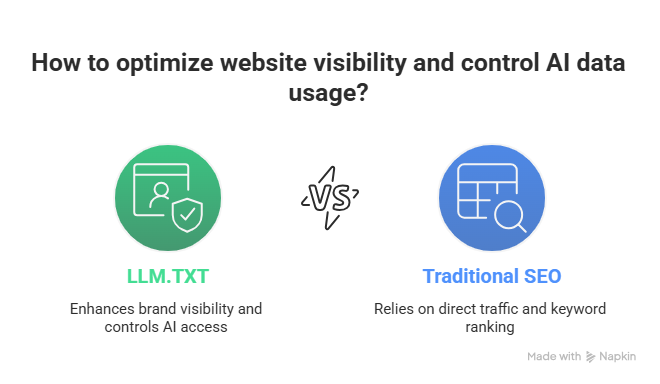
LLM.TXT is a new file format similar to robots.txt, but designed specifically for AI crawlers and large language models.
It tells AI agents what content they can read, how they can use it, and how your brand should be attributed when quoted or summarized.
Think of LLM.TXT as the bridge between your website and AI-driven search engines — ensuring that your content is used responsibly and credited correctly.
Why LLM.TXT Matters in 2025 and Beyond
1. Preparing for the AI Search Revolution
AI search engines like Google SGE (Search Generative Experience), Perplexity, and ChatGPT’s web search are transforming how users discover content. Instead of visiting multiple sites, users now get summarized answers — and LLM.TXT ensures that your website is recognized as a trusted source in these AI responses.
2. Gaining Brand Visibility in AI Results
When AI models pull data from the web, they often summarize multiple websites without attribution. By using LLM.TXT, you can instruct these models to include proper credits or backlinks, protecting your brand reputation and visibility in AI search results.
3. Controlling AI Data Usage
Just like robots.txt, the LLM.TXT file lets you restrict or allow access to certain parts of your website for AI crawlers.
This means you can block confidential, premium, or members-only content while allowing public pages like blogs and product descriptions to be referenced.
How LLM.TXT Works
The LLM.TXT file acts as a set of permissions and rules for AI crawlers. Each AI company (like OpenAI, Anthropic, or Google-AI) has its own user-agent, and you can specify which ones can access your site.
Example of an LLM.TXT File
# Example LLM.TXT
User-agent: openai
Allow: /blog/
Disallow: /private/
Content-usage: quote-limit=50
Attribution: must-link https://yourwebsite.com
Author: Bhawna Valecha
This structure gives AI systems clear guidance on what’s allowed and how to credit your work.
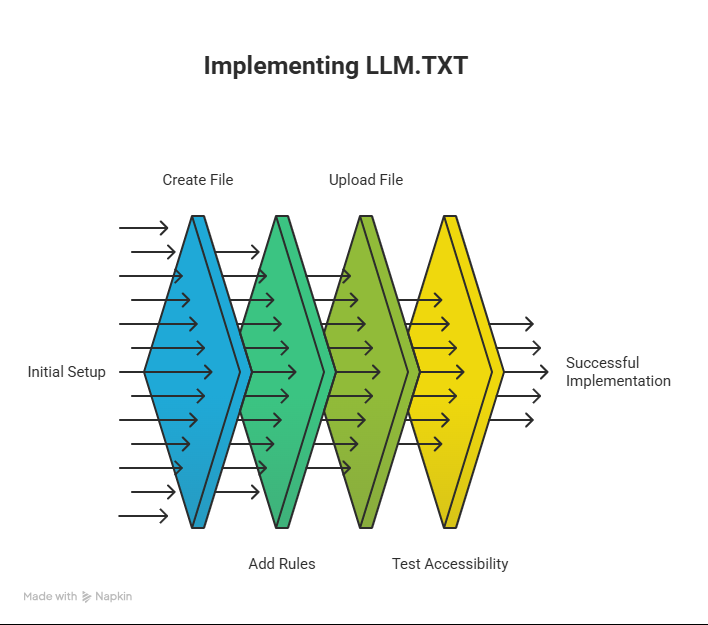
How To Implement LLM.TXT
Step 1: Create the File
Open a text editor (like Notepad) and name the file LLM.TXT.
Step 2: Add AI Agent Rules
Define user-agents (AI bots like OpenAI, Anthropic, or Google-AI) and specify allow/disallow permissions.
Step 3: Upload to Root Directory
Place the file in your website’s root folder, just like robots.txt. For example: https://yourwebsite.com/llm.txt
Step 4: Test Accessibility
Visit the URL directly to ensure the LLM.TXT file is publicly accessible and properly configured.
SEO Benefits of LLM.TXT
Benefit
Impact
AI Visibility
Boosts your chances of being referenced by AI models.
Brand Credit
Ensures backlinks and attribution in AI-generated content.
Content Control
Prevents unauthorized use of private or paid data.
Future-Ready SEO
Keeps your website optimized for evolving AI search engines.
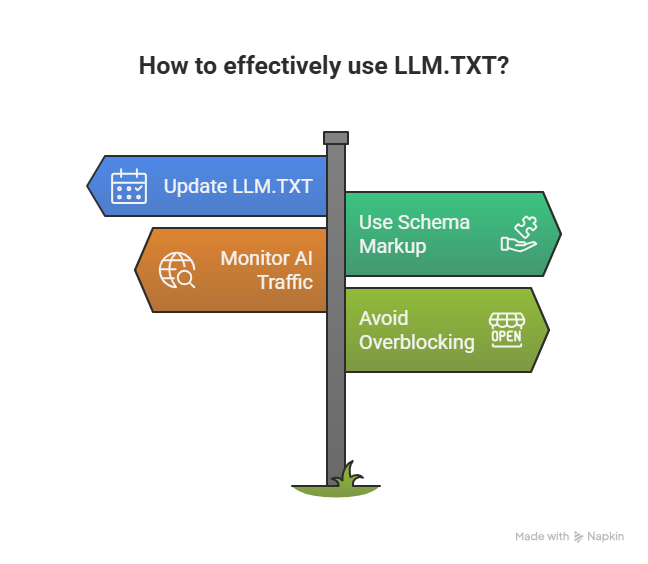
Best Practices for Using LLM.TXT
Keep Your LLM.TXT Updated
As new AI crawlers are launched, update your file to include or block them as needed.
Combine LLM.TXT with Structured Data
Use schema markup with your LLM.TXT to improve how AI models understand your content.
Monitor AI Traffic
Track visits from AI crawlers through your server logs or analytics tools.
Avoid Overblocking
Allow selective access to public content — total blocking may hurt your AI SEO visibility.
The Future of SEO with LLM.TXT
As AI-driven search becomes the norm, websites will need to adapt their SEO strategies to ensure visibility across both search engines and AI assistants. Implementing LLM.TXT positions your brand ahead of the curve — ensuring you’re recognized, cited, and trusted in the next generation of search.
Over time, LLM.TXT is expected to become a universal SEO protocol, just like robots.txt or sitemap.xml.
LLM.TXT is not just a file — it’s the next revolution in SEO. By implementing it, you empower your website to communicate directly with AI systems, protect your content, and strengthen your brand’s presence in AI-generated search results.
If SEO is about being found on Google, then LLM.TXT is about being recognized by AI. Start today — because the future of digital visibility depends on it.
FAQs About LLM.TXT
Q1: Is LLM.TXT officially recognized by Google or OpenAI?
Not yet, but it’s gaining attention among SEO and AI experts as a potential standard for AI crawlers.
Q2: Can LLM.TXT improve Google rankings?
Indirectly, yes — it boosts your AI visibility, leading to brand mentions and referral traffic.
Q3: Where should I upload the LLM.TXT file?
Upload it to your root directory, for example: https://yourwebsite.com/llm.txt
Q4: Should small businesses use LLM.TXT?
Absolutely. It helps protect your content and improves AI-based visibility, no matter your brand size.
Q5: What if I don’t create LLM.TXT?
AI models may still crawl your content, but you’ll have no control over usage or attribution.



 By
/ November 13, 2025
By
/ November 13, 2025